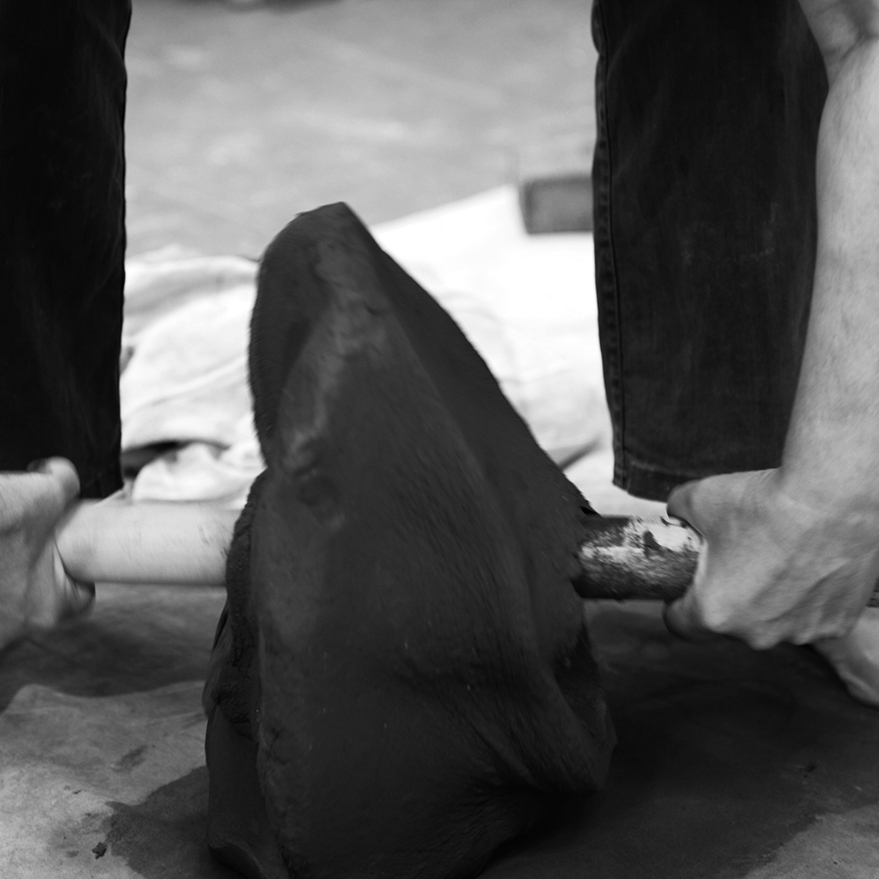
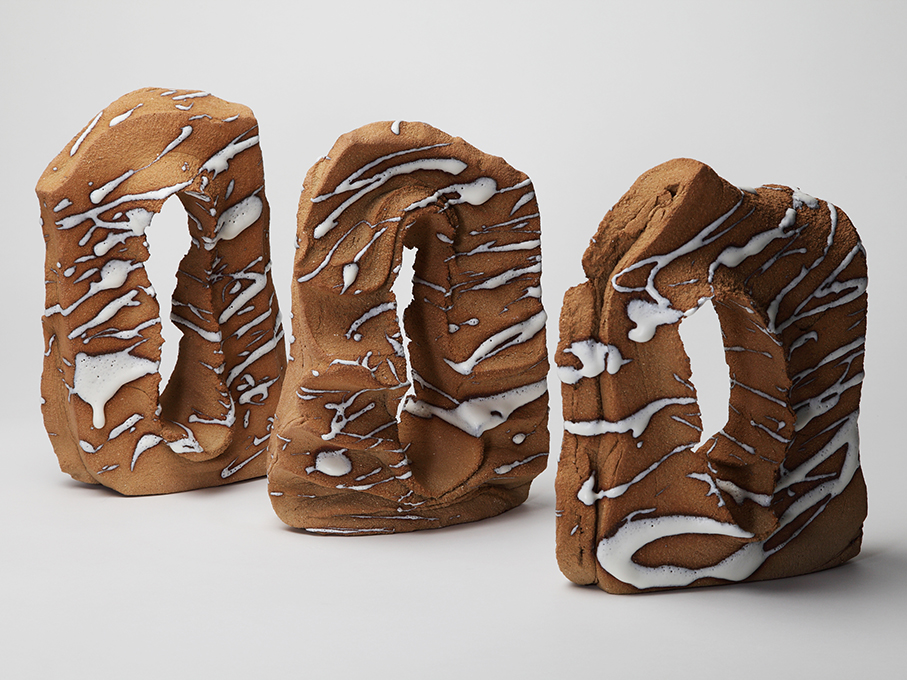
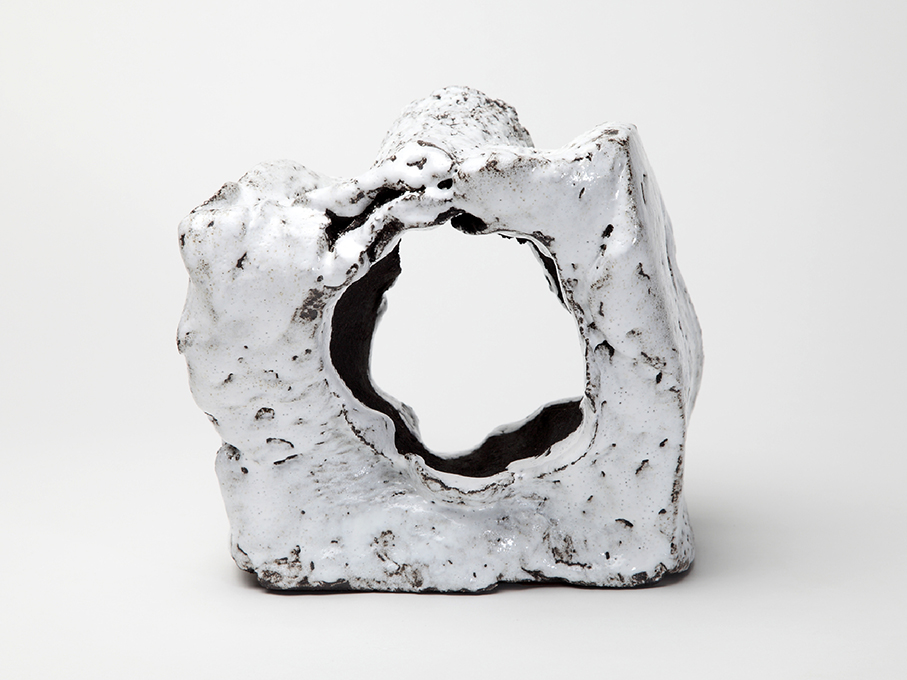
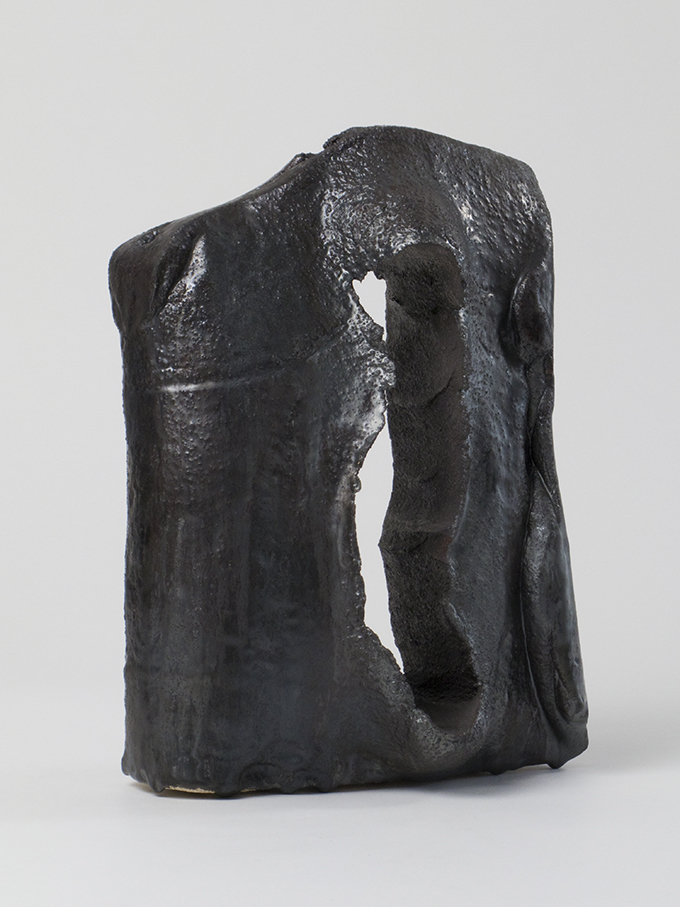
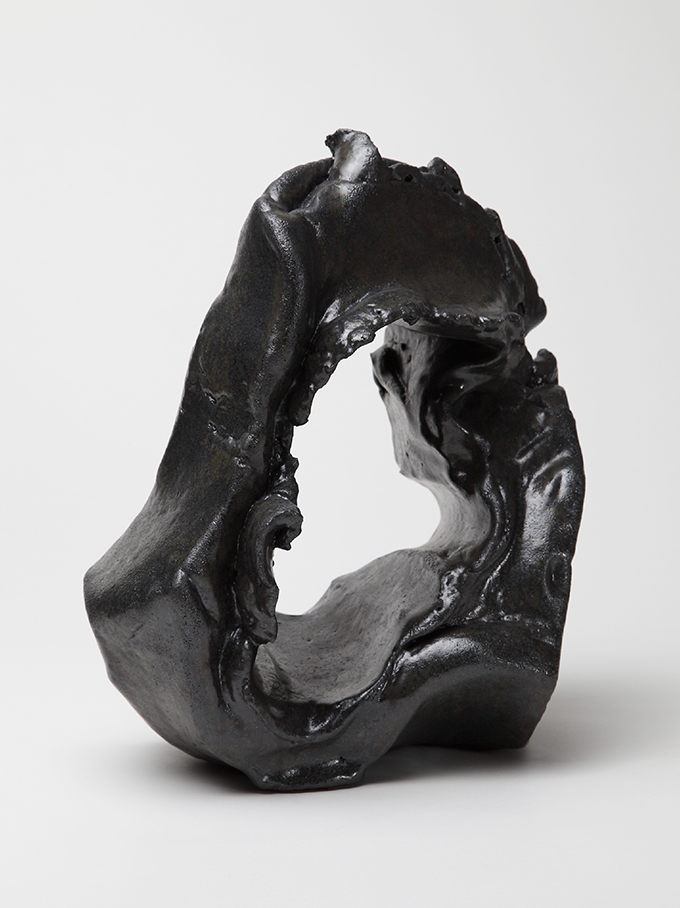
Les trouées, les percées, les traces : ces pièces ont été réalisées dans le bloc de terre. Placé au sol sur un tissu, le bloc de terre se métamorphose sous la force des pieds et des mains. Une fois la forme obtenue je transperce le bloc avec un bâton en bois que je pousse à l’aide d’un marteau. A ce moment, j’attrape le bâton à ses extrémités et je soulève le bloc. La terre commence à s’étirer progressivement sous son propre poids, la déformation opère. Je décide alors d’arrêter lorsque cela me convient. Jouer avec le dedans et le dehors, l’intérieur et l’extérieur. Passage d’une vie à l’autre, d’un endroit à un autre, d’un âge à un autre et toutes les difficultés que cela engendre. Laisser en place la résistance du passage. Il n’y a plus ou pas d’automatisme, de répétition régulière du geste. Il n’y a seulement qu’une connivence avec la matière : de la terre et de l’eau.
J’engage un dialogue avec l’argile telle qu’elle se trouve devant moi, comme un morceau de matière doux et flexible. Ce dialogue s’effectue à travers une forme de langage corporel : l’action primitive de presser des parties de mon corps (mes doigts) contre le corps de l’argile… Le dialogue ne peut avoir lieu que si je sympathise avec la matière, m’adaptant au temps contenu dans l’argile et aux rythmes de la nature.
Saturo Hoshino
The holes, the breakthroughs, the traces: these pieces were created in the clay block. Placed on the floor on a cloth the block of clay metamorphoses under the force of feet and hands. Once the shape has been obtained, I pierce the block with a wooden stick that I push with a hammer. At this point, I grab the stick at its ends and lift the block. The clay gradually begins to stretch under its own weight, and the deformation begins. I decide to stop when it feels right. Playing with inside and outside, interior and exterior. Moving from one life to another, from one place to another, from one age to another, and all the difficulties that entails. Leaving in place the resistance of passage.
I engage in a dialogue with the clay as it lies before me, like a piece of soft, flexible material. This dialogue takes place through a form of body language: the primitive action of pressing parts of my body (my fingers) against the body of the clay… The dialogue can only take place if I empathize with the material, adapting to the time contained in the clay and the rhythms of nature.
Saturo Hoshino